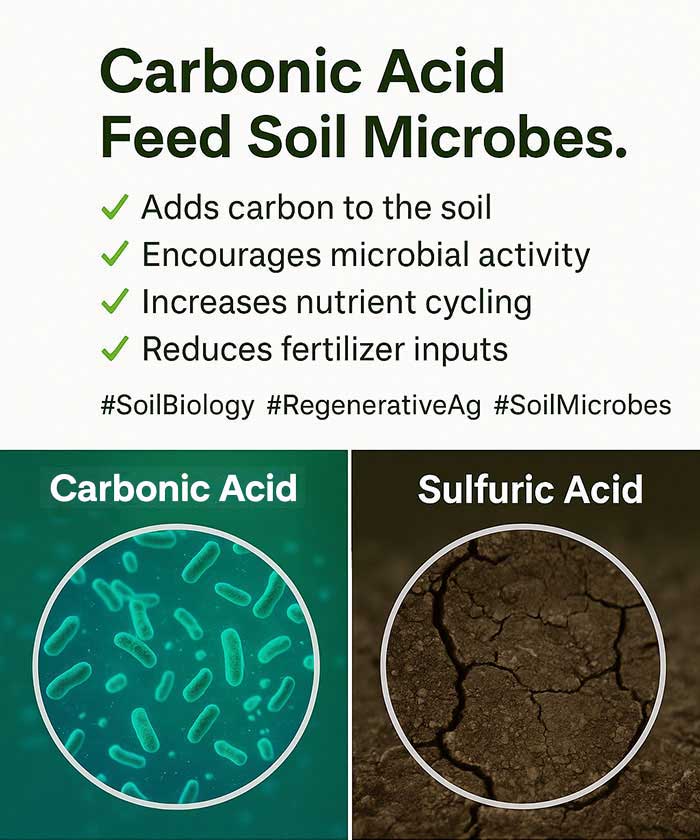
Carbonic Acid in Irrigation
A Science-Backed Solution for Better Soil and Crop Performance
In high-value agriculture, irrigation water quality directly impacts soil health, nutrient efficiency, and ultimately, crop yield and profitability. One of the biggest silent threats is high bicarbonate irrigation water, which raises soil pH and ties up nutrients like phosphorus, iron, and zinc.
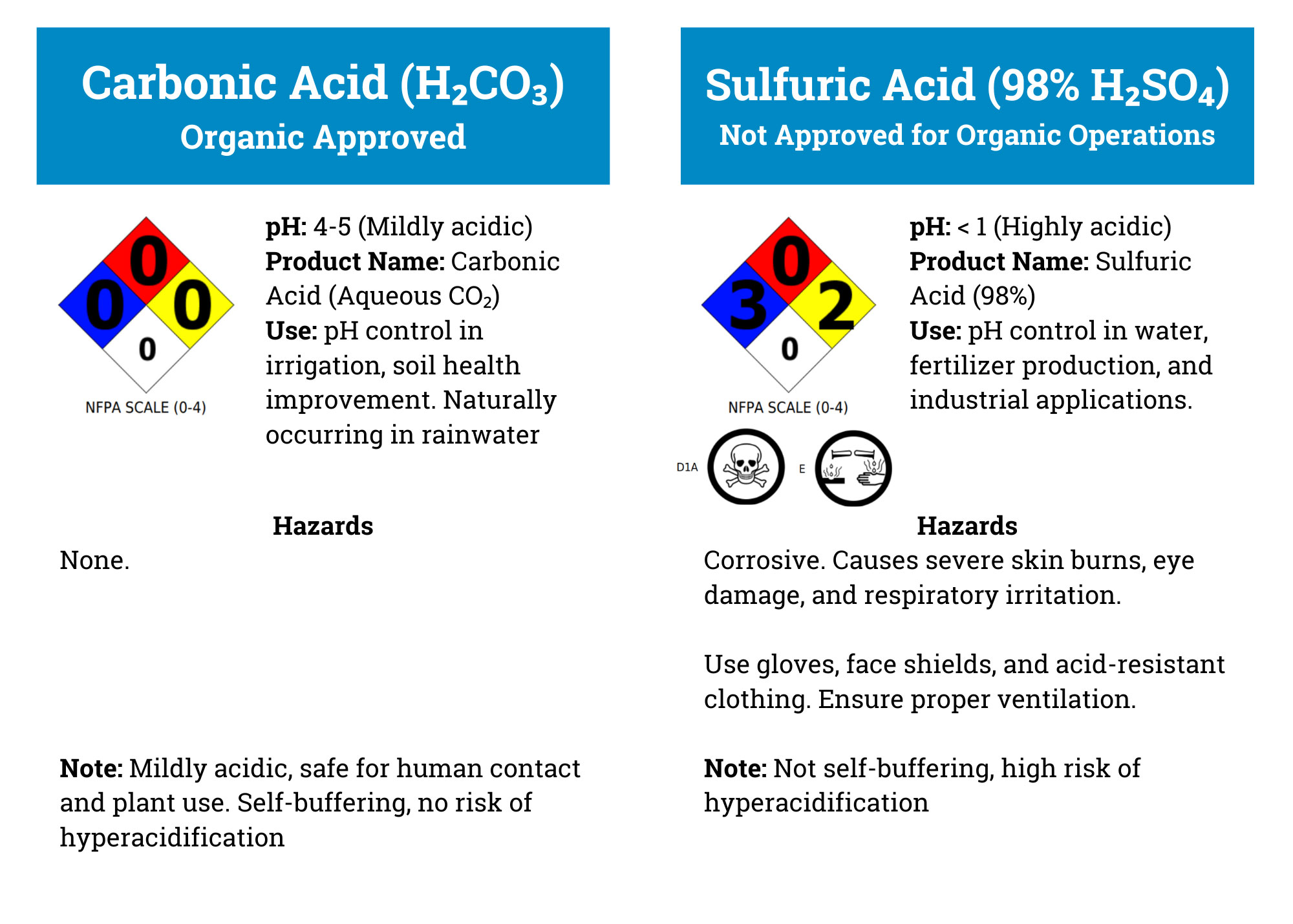
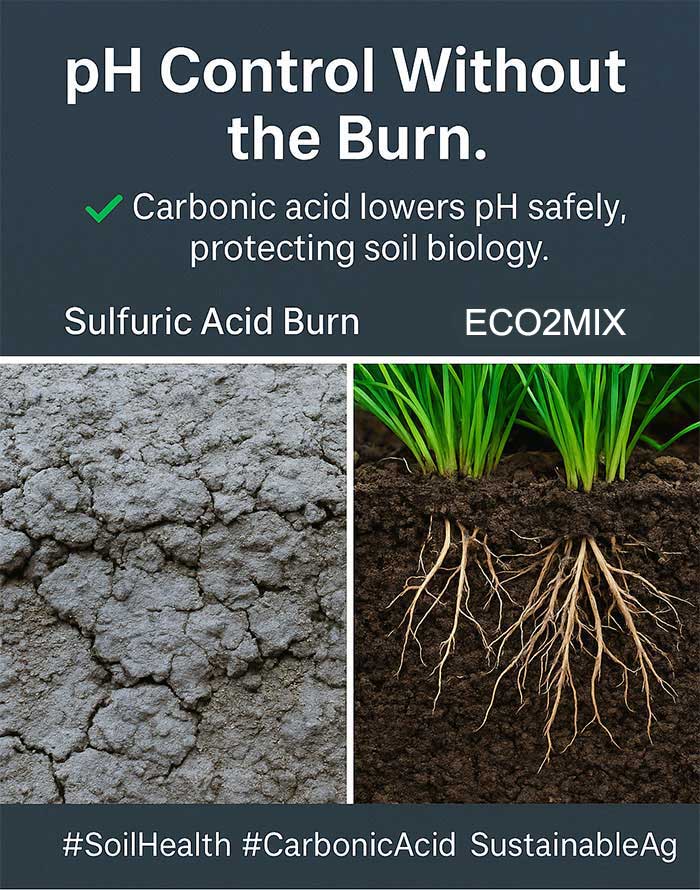
A growing number of farms are replacing harsh mineral acids like sulfuric with carbonic acid—a natural, safer acid formed by dissolving carbon dioxide (CO₂) into water. Unlike sulfuric acid, carbonic acid enhances the soil biome and improves nutrient use efficiency without damaging equipment or biology.
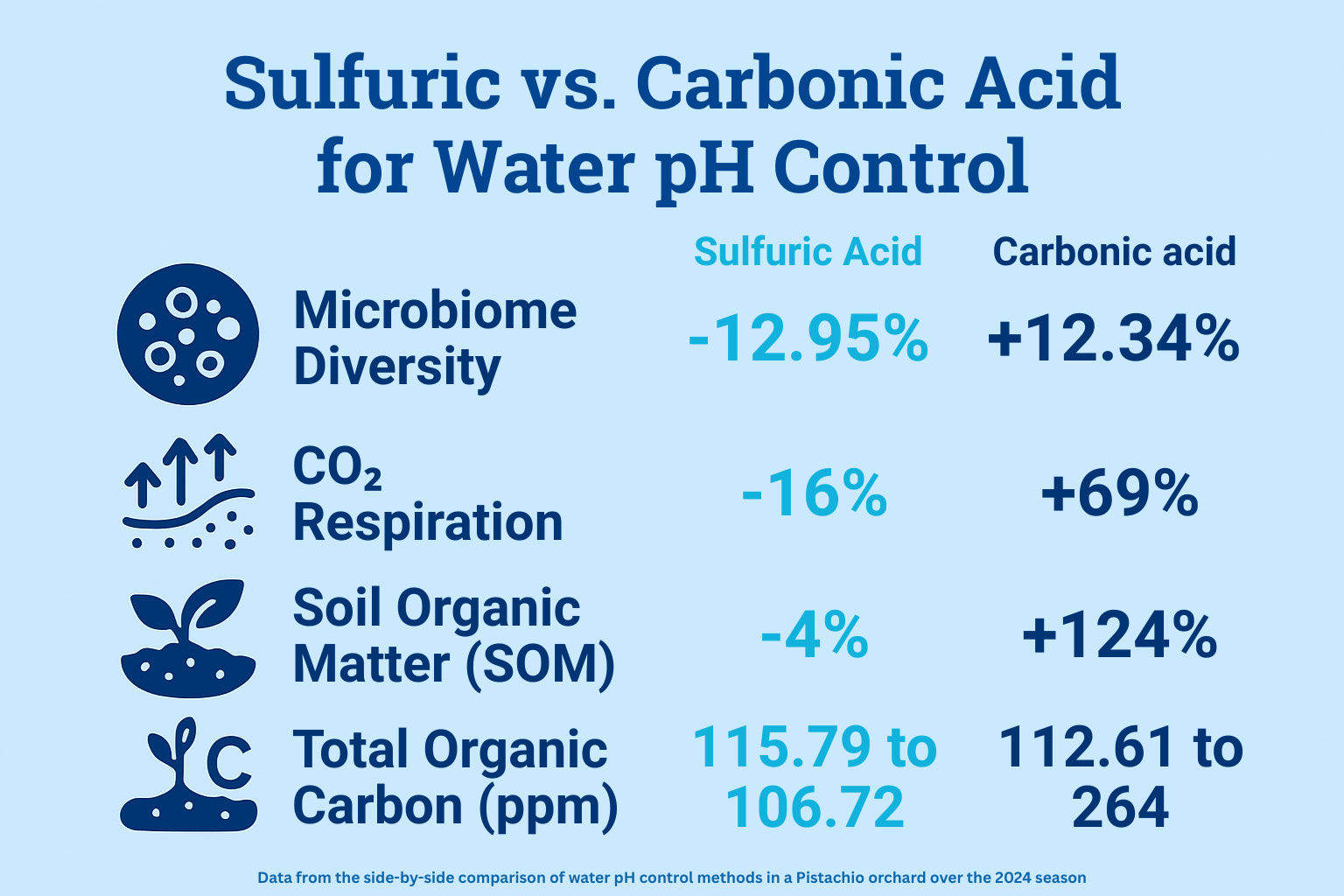
Let's look at the data.
1. Carbonic Acid Unlocks Nutrients in the Soil
A peer-reviewed study published in Agriculture (MDPI, 2022) evaluated the use of carbonated irrigation water on Tempranillo grapevines. The results were impressive:
- Iron (Fe) solubility increased by 241%
- Manganese (Mn) by 131%
- Zinc (Zn) by 31%
- Phosphorus (P) by 128%
These are key nutrients that are often unavailable in high pH soils due to bicarbonate binding. Carbonic acid releases them back into the soil solution—where crops can use them.
Read the study here:
Carbonic Acid Irrigation Enhances Nutrient Uptake and Grape Yield (MDPI)
2. Carbonic Acid Stimulates Soil Microbial Life
Healthy soil is living soil. Microbial respiration and enzyme activity drop significantly when irrigation water contains high bicarbonates or raises pH above 7.5. But when CO₂ is infused into water and delivered as carbonic acid, it has the opposite effect.
According to soil microbiology research on carbonated irrigation (ResearchGate, 2015), carbonic acid:
- Increased root exudation and soil microbial respiration
- Enhanced availability of N, P, K, Ca, and Mg
- Led to improved water infiltration and root growth
Full paper:
Soil, Plant, and Canopy Responses to Carbonated Irrigation Water (ResearchGate)
3. Better Water Infiltration and Soil Structure
The presence of carbonic acid in irrigation water neutralizes bicarbonates, preventing them from displacing calcium and compacting the soil. As a result:
- Soil porosity improves
- Water infiltration increases
- Root zones receive more oxygen
These conditions are ideal for the development of mycorrhizal fungi and aerobic bacteria, which are essential to nutrient cycling and plant immunity.
Learn more here:
Healthy Soils Week – Carbonic Acid for Soil Biology (ECO2Mix)
4. Improved Crop Yields and Fertilizer Efficiency
With more nutrients available and more microbial activity in the rhizosphere, plants grow faster, stronger, and more uniformly. In the grapevine study mentioned above, carbonated water irrigation led to:
- 30–40% increase in grape yield
- Higher sugar accumulation in berries
- More consistent harvest timing
Farmers can also reduce the need for excess fertilizers, since nutrients like P, Fe, and Zn remain in soluble forms longer. That's cost savings + performance gains.
Source:
Carbonated Water Study on Grape Yields (MDPI)
5. Safety and Environmental Advantages Over Sulfuric Acid
Unlike sulfuric acid:
- Carbonic acid does not corrode equipment
- It decomposes into CO₂ and water, leaving no toxic residues
- It is safe for handlers and poses no risk of acid burns or fumes
It also fits into the growing regulatory push for safer, biologically compatible inputs.
Carbonic acid is more than just a pH adjustment tool—it's a strategic agronomic input that supports soil biology, nutrient efficiency, and long-term productivity.
With published science backing its performance and safety, carbonic acid is an ideal replacement for sulfuric acid in high-pH irrigation systems.